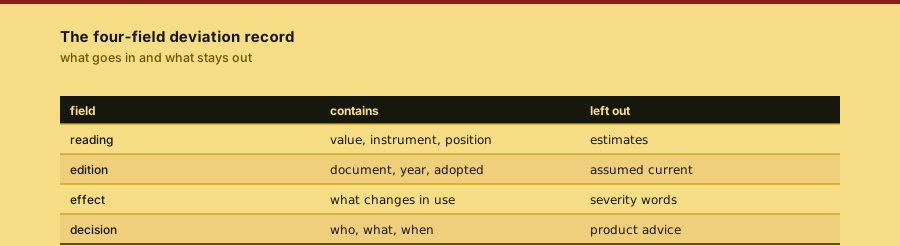
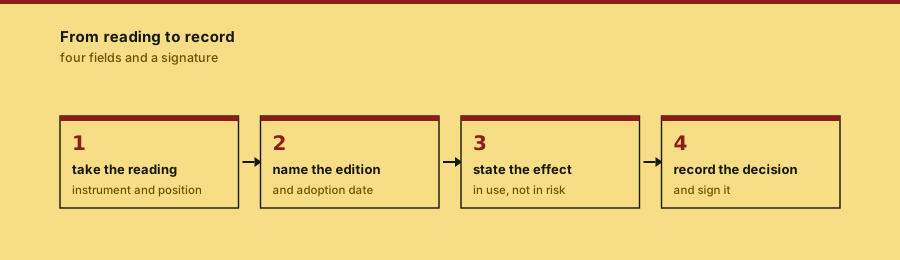
A deviation record has four fields and no adjectives. It states what was measured, which edition it was measured against, what the difference means in use, and who decided what happens next.
How to log a deviation from a clause
checked 2026-09-16kept by The Nosing Line (a named line, not a person)
The four fields
- The reading. The measured value, the instrument, the position and the date. No rounding beyond the resolution of the instrument.
- The edition. The document, its year and its adoption date in that jurisdiction. A reading without an edition is not a deviation.
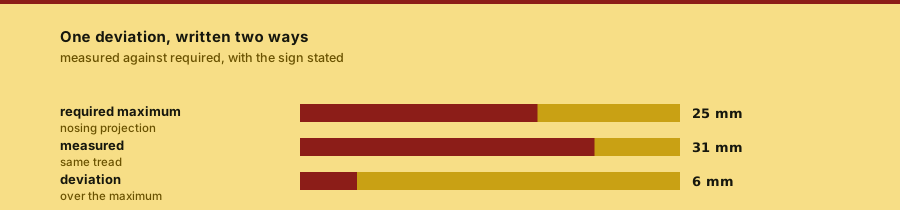
- The effect. What the difference does in use, in one sentence, without a risk adjective. Over-projecting nosings are a trip edge on the way up; under-projecting nosings wear to nothing and the edge disappears. State which applies.
- The decision. Who decided what happens, when, and what the alternative was. If nothing is being done, say so and say why, because a recorded decision to accept is a valid outcome and an unrecorded one is not.
What a record must not contain
No adjectives about severity. No statement that the stair is unsafe, because a deviation from a clause is not a statement about safety and the two claims are made by different people with different evidence. No unattributed reference to a standard. No recommendation for a product, because a deviation record is not a specification.
| Field | Contains | Does not contain |
|---|---|---|
| Reading | value, instrument, position, date | estimates |
| Edition | document, year, adoption date | the current edition by default |
| Effect | what changes in use | severity adjectives |
| Decision | who, what, when | a product recommendation |
Why the record is the useful artefact
Most deviations on this line are not defects. A stair built in 2014 to the edition then in force and measured today against the current one will show a deviation, and the correct outcome is a record that says so. The record is what stops the same question being answered differently by the next person who visits, and it is the reason the deviation page exists at all.
Sign and date the record. An unsigned deviation record is a set of measurements. The signature is what makes it a decision, and the date is what makes it possible to tell later whether the decision still applies.
Where the record goes
The record is filed against the flight, not against the clause. One flight can carry deviations against three different documents, and filing by document is how records get separated from the thing they describe.
Documents checked
- 1Workplace health, safety and welfare: Approved Code of Practice and guidance (HSE L24)supports the workplace duty that makes a written record of a decision necessary
- 2Construction Toolbox Talks (NIOSH)supports the toolbox-talk format a deviation is usually communicated in
- 3Stop Falls in Construction (NIOSH campaign)supports the campaign framework that a deviation record is filed inside
Each line points at one specific document, with its own title as the link text. No line is a home page and no line is a search result.
File this and go Close this page once the four fields are filled in and signed. A record with a decision in it is finished.