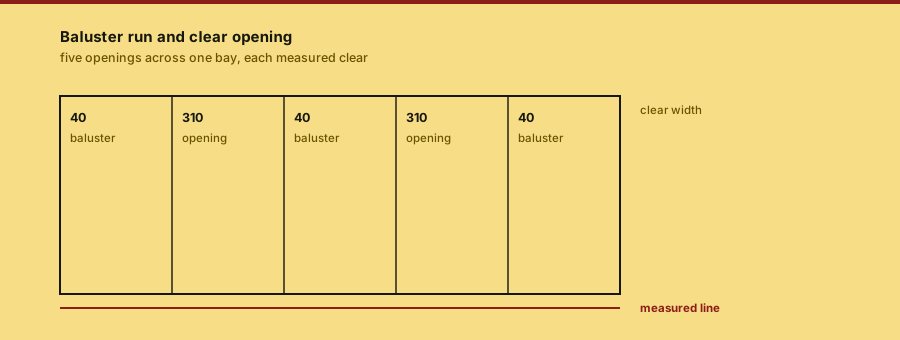
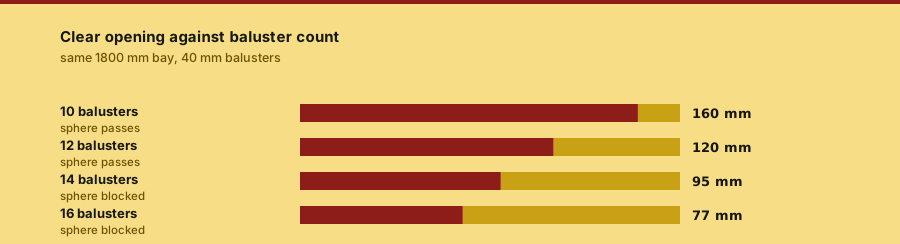
A guard is tested with a sphere. If the sphere passes, the guard fails, and the height it was set to does not matter. The rule is written that way because the failures it prevents are falls through a gap, not falls over a rail.
Guard and baluster: the opening, not the height
checked 2026-09-16rots yes — the figures above move with the editionkept by The Nosing Line (a named line, not a person)
Two spheres, two populations
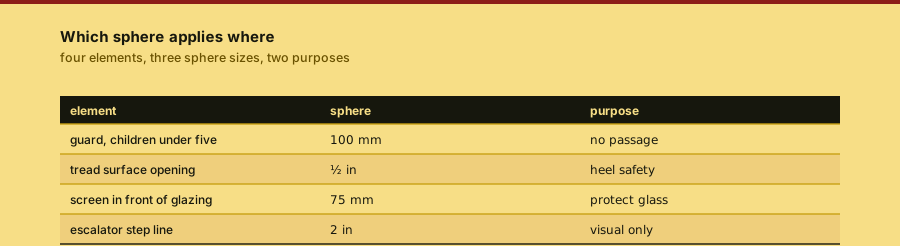
The British approved document uses a 100 mm diameter sphere. Where a building may be used by children under five, the guarding to a flight of stairs must be built so that a 100 mm sphere cannot pass through any opening in it, and so that children cannot readily climb it. The second half of that sentence is the one people forget: avoiding horizontal rails is the practical answer, because a horizontal rail is a ladder.
The American accessibility standards use a smaller sphere for a different purpose. Surface openings in a floor or ground surface, including the tread of a stair, must not allow passage of a sphere more than ½ inch in diameter. That is about a walking surface, not a guard, and it is why a perforated tread and a baluster run are governed by different numbers.
| Element | Sphere | Purpose |
|---|---|---|
| Guard opening, children under five | 100 mm | prevent passage and entrapment |
| Tread or floor surface opening | ½ in (12.7 mm) | heel and cane safety |
| Permanent screen in front of glazing | 75 mm | keep the sphere off the glass |
| Escalator step demarcation | 2 in yellow line | visual, not a sphere rule |
The height, and what it depends on
Guard height is not one figure either. It depends on the drop the guard is protecting and, in the British document, on the building type: the same 1 metre that answers for an apartment balcony is not automatically the answer for a light-well in a plant room. The Australian code answers the same question in its FAQ with the same 1 metre for a Class 2 building, which is a useful cross-check but not a substitute for the clause.
A guard is not the same as a handrail, and a balustrade is not the same as a barrier. The words overlap in trade use and do not overlap in the clauses. Read the definition in the document you are being held to before you argue about the height.
Where this page stops
The handrail that may be mounted on a guard is owned by the handrail page. The enclosure a stair sits inside is owned by the exit stair page. This page owns the openings and the guard height.
Documents checked
- 1eCFR :: 29 CFR 1910.29 -- Fall protection systems and falling object protection--criteria and practicessupports the criteria a guard or rail system has to meet once it is provided
- 2Chapter 3: Floor and Ground Surfaces -- Guide to the ADA Standardssupports the ½ inch surface-opening rule that governs a tread rather than a guard
- 3Stairways, barriers and handrails (NCC FAQ)supports the barrier height answer for a residential apartment building
Each line points at one specific document, with its own title as the link text. No line is a home page and no line is a search result.
File this and go Close this page after you have measured the largest opening. Everything else about a guard is secondary to that one reading.