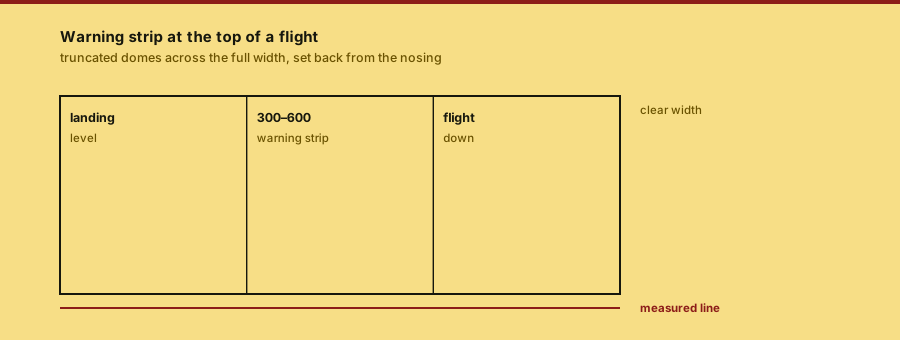
A tactile indicator is a warning, not a wayfinding aid. It tells a person with a long cane or a guide dog that a hazard is starting, and the hazard it is allowed to warn about at a stair is the edge of the flight.
Tactile indicator: the warning surface and its placement
checked 2026-09-16rots yes — the figures above move with the editionkept by The Nosing Line (a named line, not a person)
Two profiles, two meanings
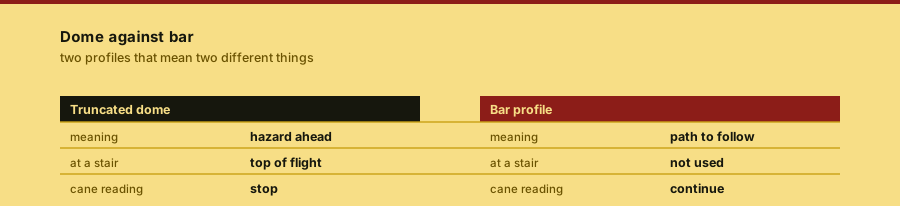
The international standard for tactile walking surface indicators covers two distinct profiles. The truncated dome is a warning: it marks a hazard ahead, and at a stair it goes at the top of the flight. The bar profile is a direction: it marks a path to be followed. Putting bars where domes belong is a design error that reads to a cane user as an instruction to keep going. A bar is not the same as a dome, and the difference is not decorative.
The Australian and New Zealand slip-resistance classification sits alongside the tactile standard rather than inside it, because a tactile strip that becomes slippery when wet is worse than no strip at all. That is why a tactile indicator is usually specified together with a slip figure, and why the two documents are read together even though neither cites the other.
| Indicator | Meaning | Placement at a stair |
|---|---|---|
| Truncated dome | hazard warning | top and bottom of the flight |
| Bar / directional | path to follow | not at a stair edge |
| Contrast marking | visual, not tactile | on the nosing or the leading edge |
| Slip classification | surface performance | specified with the strip, not instead of it |
The contrast rule that is not a tactile rule
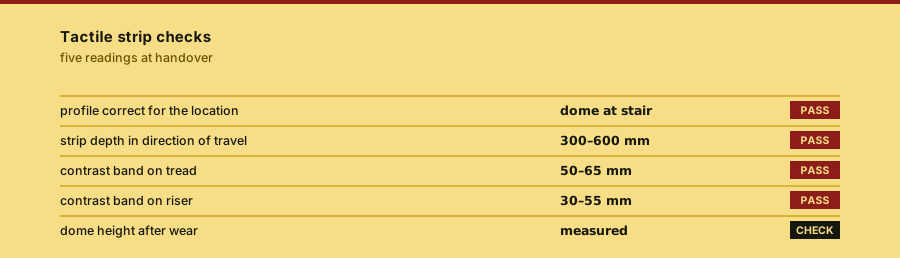
A tactile strip is a physical thing and a contrast strip is a visual thing, and the two are frequently the same product. The British approved document addresses the visual half directly for common access areas in buildings containing flats: make step nosings apparent, using a material that contrasts visually, 50 mm to 65 mm wide on the tread and 30 mm to 55 mm on the riser. Those are two separate bands because the strip wraps the edge.
The American accessibility standards treat visual contrast on a nosing as a recommendation rather than a requirement, and give approximately 2 inches as the width, placed either on the nosing or at the leading edge of the tread. The exception is an escalator in a rail or fixed guideway station, where the demarcation is required and the yellow line is capped at 2 inches wide.
A tactile indicator wears. The domes lose height under traffic and a worn dome is a dome that no longer reads underfoot. That is why the wear question is a maintenance question and not a specification question, and it is the subject of a bulletin on this site.
Owned elsewhere
The nosing the strip is bonded to is owned by the nosing page. The slip figure of the finished surface is owned by the slip resistance page. This page owns the indicator.
Documents checked
- 1ISO 23599:2019 -- Assistive products for blind and vision-impaired persons: Tactile walking surface indicatorssupports the scope of the international standard for tactile walking surface indicators
- 2Chapter 7: Signs -- Guide to the ADA Standardssupports the sign and visual-contrast requirements that sit alongside a tactile surface
- 3AS 4586-2013 Slip resistance classification of new pedestrian surface materials (Standards Australia)supports the slip-resistance classification a tactile surface is specified against
Each line points at one specific document, with its own title as the link text. No line is a home page and no line is a search result.
File this and go Close this page once you know which profile you are buying. Domes warn; bars direct, and at a stair they are not interchangeable.