The pendulum is the preferred instrument in British practice and it is easy to take a reading with it that means nothing. The slider, the surface condition and the number of swings decide whether the number is evidence or decoration.
How to take a pendulum slip reading
checked 2026-09-16rots yes — the figures above move with the editionkept by The Nosing Line (a named line, not a person)
Before you swing
The pendulum method is the subject of a British standard in three parts, and the rubber sliders are prepared to a specification in it. There is a small difference between the two published methods of slider preparation, and the safety executive notes that in certain limited situations the two methods may give slightly different results.
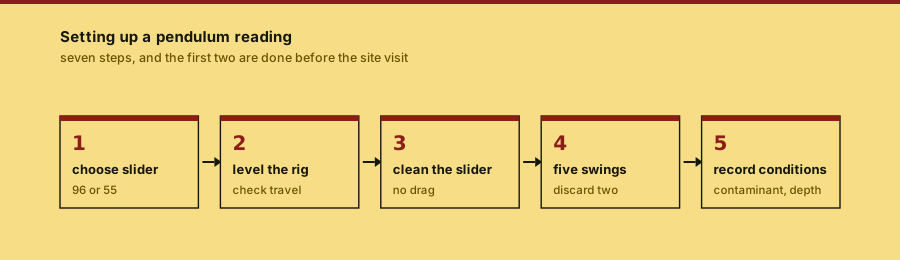
- Choose the slider before you go. Slider 96 rubber gives enough information for shod pedestrians. Slider 55 is the barefoot slider. For a profiled floor it may be helpful to use both.
- Level the instrument and check the pendulum travel against the scale before you touch the floor. A pendulum that will not swing freely has a transport problem, not a floor problem.
- Clean the slider and set it down on the surface without dragging it. A contaminated slider reads low and the reading cannot be corrected afterwards.
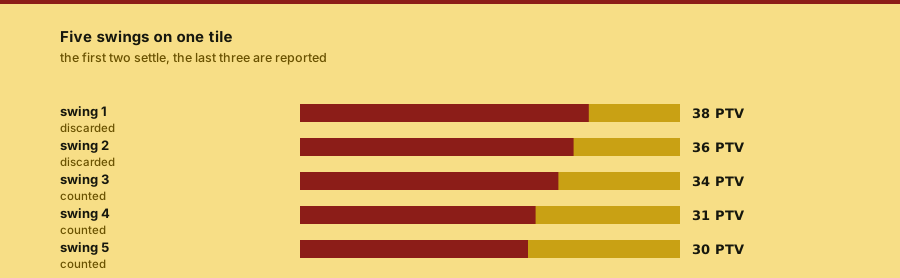
- Take five swings and discard the first two. Report the mean of the last three, because the first two include the settling of the slider on the surface.
- Record the contaminant and its depth. The bands are published for water-wet conditions, and a reading taken dry is not comparable with one taken wet.
- Record the temperature and the floor finish, including whether the floor is as supplied or has been cleaned since installation.
- Repeat at three positions at least a metre apart. A single position describes a single position, and the guidance notes that the instrument averages over the distance the slider travels, so small slippery areas can be missed.
The four conditions that void a reading
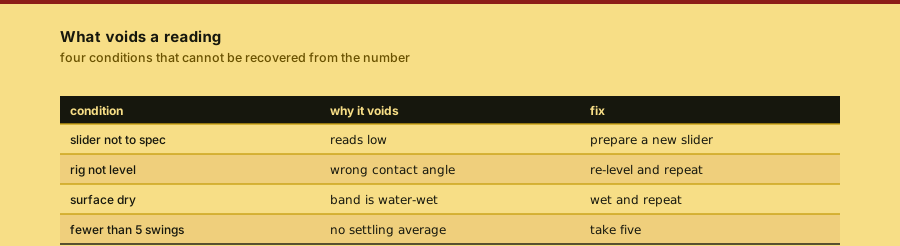
A reading is void if the slider was not prepared to the standard, if the pendulum was not level, if the surface was dry when the band being quoted is a water-wet band, or if fewer than five swings were taken. None of those is recoverable from the number itself, which is why the conditions are recorded alongside it.
The guidance is explicit that most slip-resistance data supplied by manufacturers is produced on as-supplied product, and that the slipperiness of a floor changes after installation. A factory figure and a site reading are two different measurements of two different things, and comparing them directly is a mistake that is made constantly.
What the number is for
The reading decides which band the surface is in. It does not decide whether the floor is safe, because safety also depends on contamination, footwear, cleaning regime and behaviour. The published slip potential model puts all of those in, and the pendulum only measures one of them.
Documents checked
- 1Slips and trips (HSE)supports the wider slip assessment approach the reading sits inside
- 2Slips, Trips and Falls (Health and Safety Authority, Ireland)supports the national authority's position on slips and trips at work
- 3HSE research report series -- archivesupports the research programme behind the assessment methods the reading follows
Each line points at one specific document, with its own title as the link text. No line is a home page and no line is a search result.
File this and go Close this page once the conditions are written next to the number. Without them the number is not evidence.