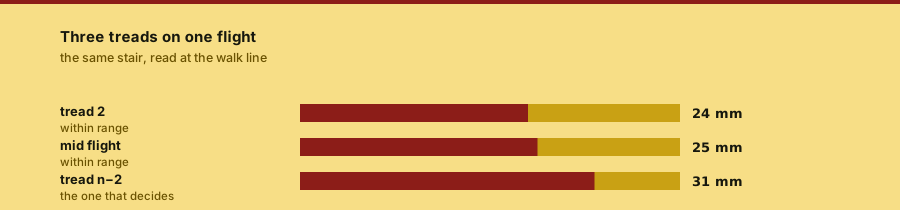
Measure three treads, not one, and measure them at the middle of the tread rather than at the stringer. A single reading at the stringer is the reading most likely to be wrong and the one most often quoted.
How to measure a nosing on a finished stair
checked 2026-09-16rots yes — the figures above move with the editionkept by The Nosing Line (a named line, not a person)
What you need
A steel rule or a depth gauge with a square edge, a straight edge long enough to span two treads, a level, and a note of the edition you are measuring against. Nothing here needs power and nothing needs a second person.
The method
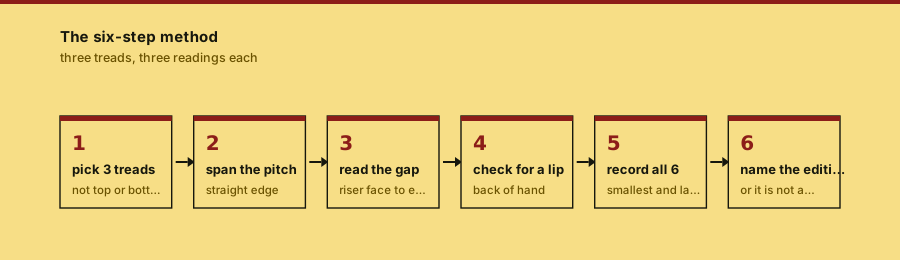
- Pick three treads: the second from the bottom, the middle of the flight, and the second from the top. The top and bottom treads are shaped differently on many flights and are not representative.
- Lay the straight edge across the nosing of the tread above and the tread you are measuring, so that it rests on both. This gives you the pitch line and stops the tape following the slope of the tread.
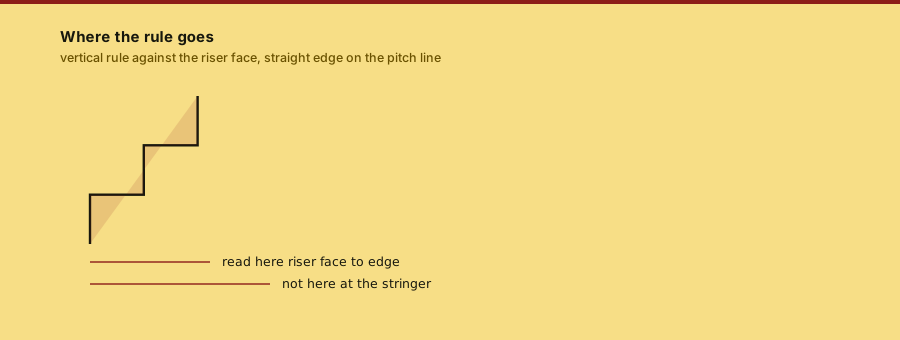
- Hold the rule vertically against the riser face below the tread you are measuring, and read the horizontal distance from that face to the outermost point of the tread edge. That distance is the projection.
- Repeat at the quarter point, the middle and the three-quarter point across the width of the tread. Record the smallest and the largest of the three.
- Check the tread for a wear lip with the back of your hand. A lip is a raised burr at the edge, and it adds to the projection without being part of the original geometry.
- Write the three treads, six numbers, and the edition you measured against into the deviation record. A projection figure without its edition is not a finding.
The two things that void the reading
A reading taken at the stringer is void, because the nosing is usually trimmed or housed at the stringer and reads long. A reading taken on a stair with a wear lip is void until the lip is described, because the lip is not part of the design and will be gone after the next refurbishment.
If the stair has been over-clad — a new tread surface laid on the old one — the projection you measure belongs to the over-clad stair, not to the stair in the drawings. Say so in the record. Two people measuring the same stair against different drawings is a routine source of disagreement.
What to do with the numbers
Compare against the edition in force, not against the edition the stair was built to, unless the building is being assessed under the edition it was built to. Then take the deviation to the log.
Documents checked
- 1OSHA eTool: Construction -- Falls -- Stairwayssupports the site method for reading a stair's geometry on a construction stair
- 2OSHA 3124: Stairways and Ladders -- A Guide to OSHA Rulessupports the practical guide that accompanies the workplace stair figures
- 3Safer Stairs Campaign (RoSPA)supports the campaign position on which stair dimensions are worth measuring
Each line points at one specific document, with its own title as the link text. No line is a home page and no line is a search result.
File this and go Close this page once the three treads are written down with their edition. The single reading is the one that gets argued about.