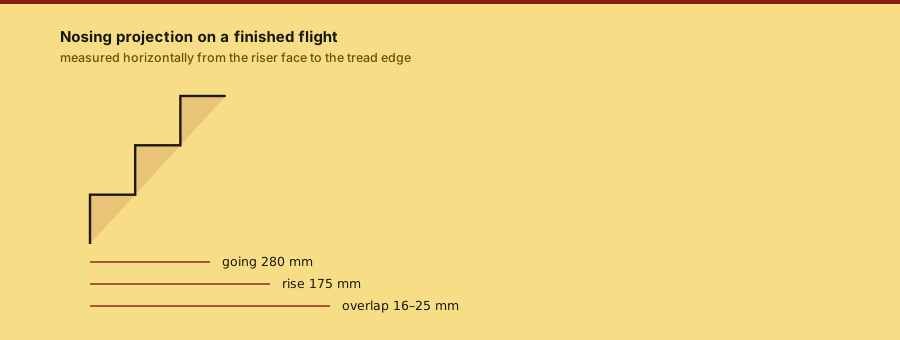
A nosing is the part of the tread that overhangs the riser below it. Three documents govern it in the English-speaking market and they do not print the same number, so the first question on any site is which one is in force.
Stair nosing: the edge the clause measures
checked 2026-09-16rots yes — the figures above move with the editionkept by The Nosing Line (a named line, not a person)
What the three documents print
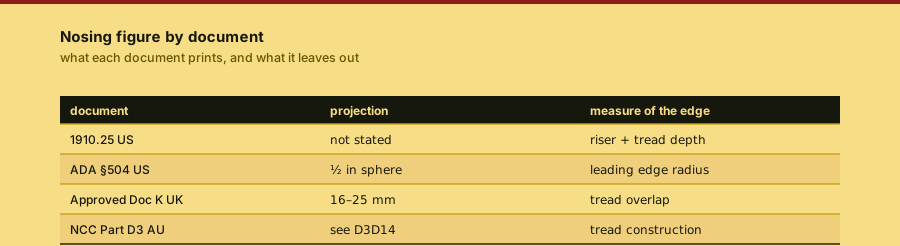
The United States workplace rule allows a standard stair between 30 and 50 degrees from the horizontal, with a maximum riser of 9.5 inches and a minimum tread depth of 9.5 inches. It does not print a nosing projection at all. The American accessibility standards govern nosings on stairs that form part of a required means of egress, and they are written around the tread surface and the leading edge rather than around an overhang figure. The British approved document prints the overhang directly: treads should overlap no more than 25 mm, and where the riser is open the treads should overlap at least 16 mm.
| Document | What it fixes | Nosing figure |
|---|---|---|
| 29 CFR 1910.25 (US, workplace) | Riser, tread depth, width, angle | not stated |
| ADA Standards §504 (US, egress) | Leading edge, surface openings | ½ in sphere rule |
| Approved Document K (UK) | Overlap between treads | 16–25 mm |
| NCC 2022 Volume One Part D3 (AU) | Tread and riser construction | see D3D14 |
Why the number is not the interesting part
A nosing that projects too far is a trip edge on the way up. A nosing that projects too little is a wear edge that disappears, and a stair with no visible edge is a stair people miss on the way down. The projection is a compromise between those two failures, which is why the same document can print a range and no single figure.
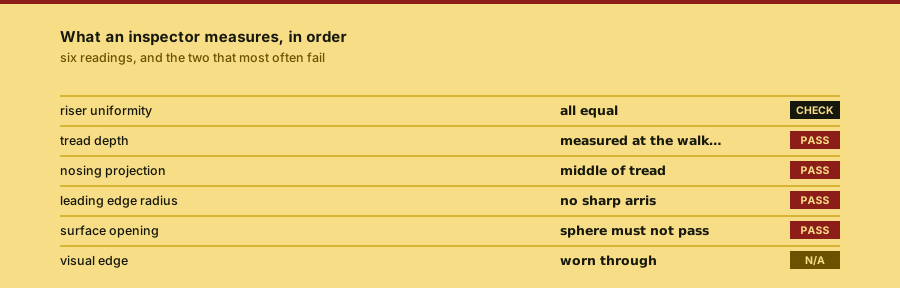
The clause that actually decides an inspection is the uniformity one. A stair with 175 mm risers and one 190 mm riser is out of compliance in every jurisdiction in this table, whatever its nosing does. Nosing is what people ask about; uniformity is what fails.
A worn nosing is not the same as an under-projecting nosing. Wear removes the leading edge and leaves the tread, so the measured going grows while the projection shrinks. Measure both, and photograph the edge before you quote a figure.
Where the definition stops
This page defines the nosing only. The geometry of the tread and riser it sits on is owned by the tread and riser page, the slip figure of its surface by the slip resistance page, and the marking that makes it visible by the marking check. Nothing here is repeated there.
Documents checked
- 1eCFR :: 29 CFR 1910.25 -- Stairwayssupports the riser, tread depth, width and angle figures for US workplace stairs
- 2Chapter 5: Stairways -- Guide to the ADA Standardssupports the egress-stair scope and the surface-opening rule that governs a nosing edge
- 3Protection from falling, collision and impact: Approved Document K (GOV.UK)supports the 16–25 mm tread overlap figures and the open-riser condition
Each line points at one specific document, with its own title as the link text. No line is a home page and no line is a search result.
File this and go Close this page once you know which document is in force. The projection is a range, and the range belongs to that document.